As renewable energy matures, one more question is becoming harder to ignore: what happens at the end of the lifecycle?
This is not a wind-only issue. It runs through solar, batteries, and wind alike.
Most of a traditional wind turbine is already recyclable. The main exception is the blade. Composite blades remain one of the most visible circularity challenges in the industry. That does not make traditional wind a bad solution. It means traditional wind was optimized around a very specific engineering task.
Long blades need extremely high stiffness-to-weight performance across a large span. That is why the industry moved toward fiberglass and other composites. For large utility-scale turbines, this was a rational and technically strong answer to aerodynamic and structural demands. But the same material choice that helped wind scale also created one of its hardest end-of-life questions.The issue is not that blade waste is one of the largest waste streams in the world. It is not.
The issue is that it has become one of the most visible weak points in the sustainability story of wind energy. In a world where public trust matters, circularity matters too.
This is where Sirocco is different.
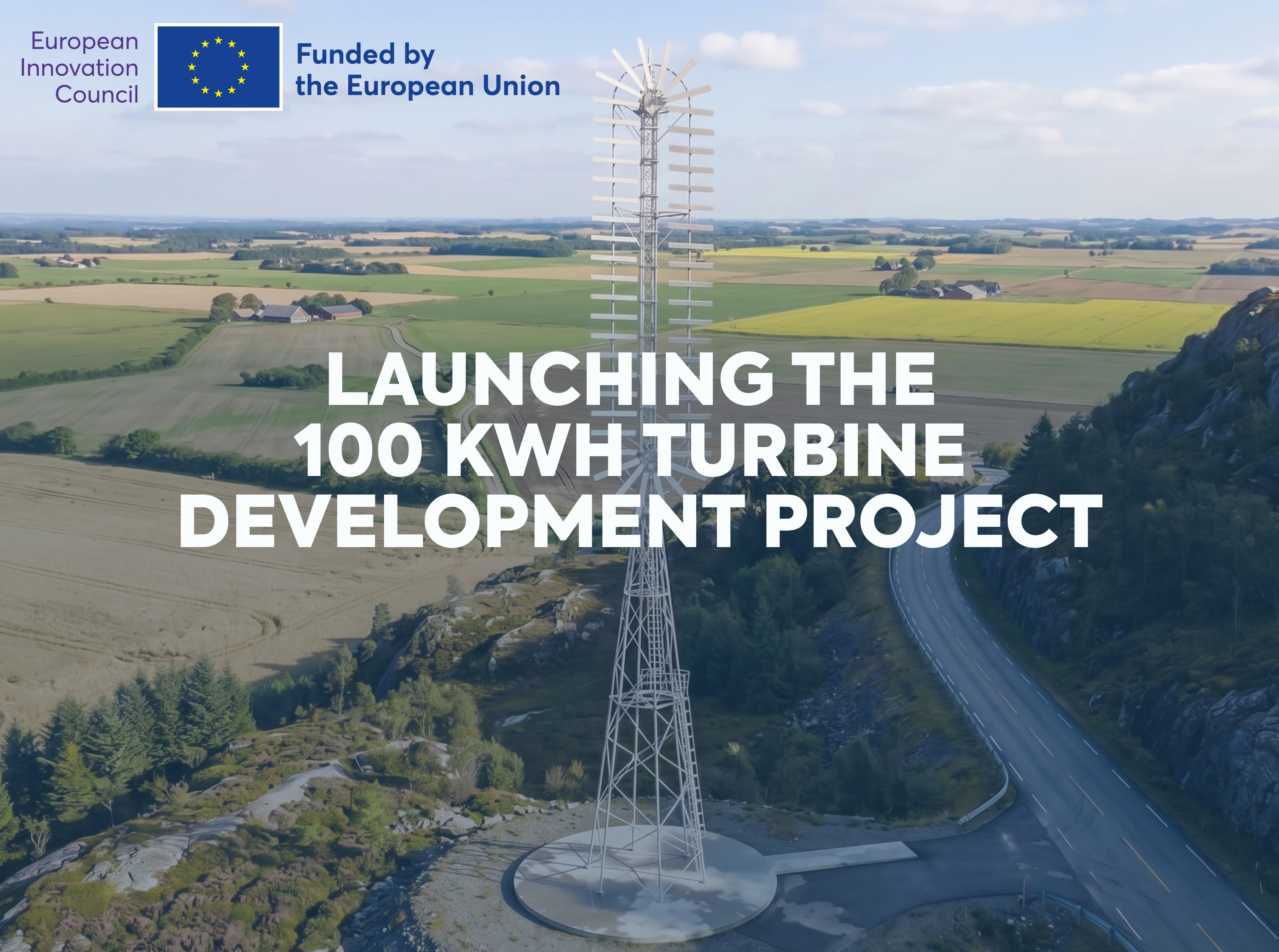
We are not trying to replace traditional wind turbines. Utility-scale wind has its role, and it is an important one. What we are building is different. We are expanding wind energy into places where conventional architectures are often limited by noise, space, permitting, or economics.
Our focus is suburban wind for business. In simple terms, it is distributed wind designed to work close to the point of consumption. That puts wind into a different role inside the energy system.
And once the architecture changes, the material logic can change too.
Traditional turbines rely on long blades with very demanding structural requirements. Sirocco uses a different geometry. Our blades are shorter, more standardized, and based on a repeatable profile. That creates room for a different manufacturing approach and opens the door to different materials.
In our case, that means aluminum blades.
Aluminum changes the equation in several ways. It supports a more standardized production process, it can simplify manufacturing, it improves repeatability, and it brings a much stronger circularity potential. Aluminum can be recycled again and again without losing its core material properties. That is a serious advantage if you want to design a wind turbine with end-of-life recovery in mind.
That matters even more if we want renewables to grow on strong economic fundamentals, without permanent dependence on subsidies, mandates, or political cycles.
The strongest clean energy systems of the future will be the ones that make direct economic sense on site, create clear value for businesses, reduce exposure to electricity price volatility, and integrate naturally into local energy demand.
That is the opportunity we see in decentralized wind.


Fill out the application and secure the best investment terms today!
.jpg)